English| EUR
Suggested for you
More currencies
Choose a language
Canyoning in Costa Rica combines technical rope work with rainforest exploration, sending participants down waterfalls, through narrow gorges, and into canyon systems carved by volcanic rivers. Arenal Volcano's network of canyons offers year-round descents through cloud forest terrain, with routes ranging from beginner-friendly rappels to multi-pitch technical drops.
Quick answer
Canyoning is a guided descent through canyon systems using rappelling, swimming, jumping, and scrambling techniques to navigate waterfalls and rock formations. In Costa Rica's Arenal region, tours operate daily from 07:00 to 18:00 with no entrance fee—participants pay only for the guided activity itself. Routes typically include three to five rappels ranging from 12 to 60 meters, with morning departures preferred to avoid afternoon rain showers common in the rainforest.
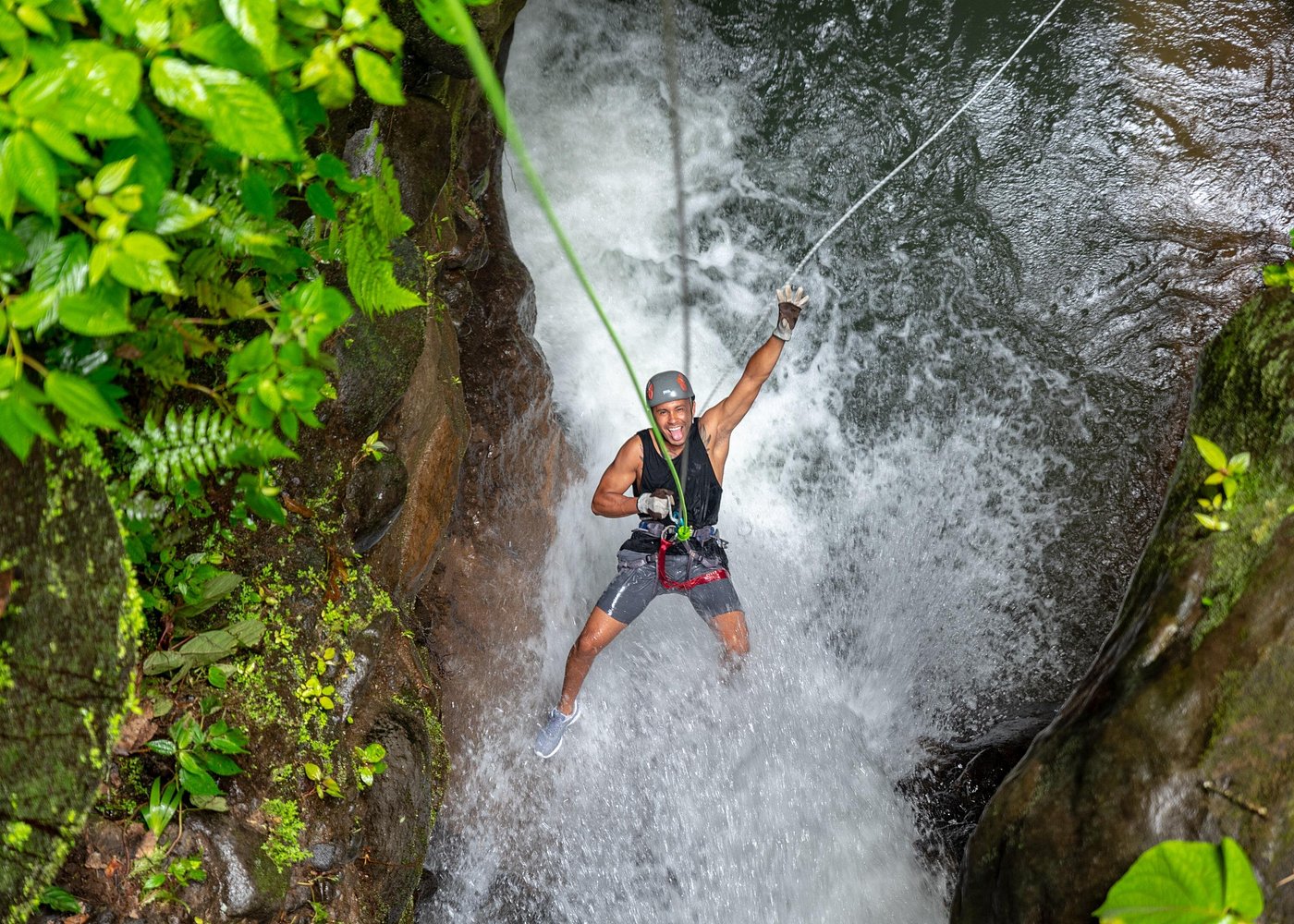
The volcanic rivers that drain Arenal's slopes have carved a network of basalt canyons where water drops through narrow slots, over tiered falls, and into deep plunge pools sheltered by fern-covered walls. What is canyoning in Costa Rica starts as a question about mechanics—harnesses, figure-eight descenders, anchor points drilled into rock—but the answer unfolds as much in the environment as the technique. Participants descend through ecosystems that shift with every rappel: bromeliad gardens clinging to wet rock at the canyon rim, moss curtains trailing into mist at mid-height, and fern grottos at the base where spray keeps the air saturated and cool even in dry season. Guides rig each rappel station before the group arrives, threading static rope through anchor bolts and setting backup systems that meet international canyon-rescue standards. The descent itself is controlled by friction: rope passes through a metal descender clipped to the harness, and the participant regulates speed by adjusting hand pressure on the rope below the device. No prior climbing experience is required—guides teach the brake-hand position and body posture during a ground briefing, then coach each person through the first rappel until the motion becomes intuitive. Between rappels, the route threads through boulder scrambles, short swims across pools, and sections of easy hiking along the canyon floor. Costa Rican canyoning routes are wet descents year-round, with waterfall volume fluctuating between dry and rainy seasons but never stopping entirely. Arenal's consistent rainfall keeps the basalt slick and the pools deep, conditions that favor descents over the dry-canyon scrambling common in desert regions. The sport here is as much about reading water flow and managing exposure to spray as it is about mastering rope work. Guides adjust routes based on river levels: when flow is high, rappels are rigged to one side of the falls; when flow drops, descents can follow the main channel. La Fortuna's tour operators maintain access agreements with private landowners whose properties contain the canyon headwalls and exit trails, a system that keeps the activity legal and the routes monitored for rock stability and anchor condition. Tours depart daily, with morning slots filling first because afternoon storms increase water volume and reduce visibility. The best arrival window is 07:00 to 13:00, aligning with the drier part of the day. Most routes require two to four hours from trailhead to exit, including rappel time, rest intervals, and the hike out.
“The descent itself is controlled by friction: rope passes through a metal descender clipped to the harness, and the participant regulates speed by adjusting hand pressure on the rope below the device.”
Canyoning in the Arenal Volcano region is a technical sport that combines vertical rappelling, river trekking, and down-climbing through lush tropical canyons. Participants navigate volcanic landscapes by descending waterfalls and traversing water-carved rock formations.
Participants use specialized harnesses and ropes to descend vertical rock faces while water flows alongside them. This technique allows access to remote sections of volcanic canyons that are otherwise unreachable.
The canyons in La Fortuna are carved into ancient volcanic rock deposited by the Arenal Volcano. The water flow over centuries has created deep, vertical chasms that define the local topography.
Moving through canyons requires walking along rocky riverbeds and maneuvering through flowing water. This process is known as canyoning and integrates swimming, wading, and strategic climbing.
Canyoning involves short, controlled descents over rock obstacles where participants use hands and feet to navigate. These sections are typically completed without the use of ropes but require balance and focus.
The activity takes place within dense rainforest ecosystems surrounding the Arenal Volcano. These environments support high levels of biodiversity, including flora and fauna that thrive in the canyon humidity.
The waterfalls utilized for canyoning are gravity-fed by high-altitude springs located in the Arenal rainforest. These water sources are consistent, providing the necessary volume for canyon descent activities.
The best arrival window for canyoning in Arenal Volcano is 07:00–13:00. Scheduling your activity during these morning hours helps avoid the afternoon rain showers that are frequent in the rainforest and can increase river levels.
Warm and humid, 24°C–30°C
Lower rainfall provides more consistent water flow for canyoning activities.
Frequent afternoon rain, 22°C–28°C
Mornings remain clear, but afternoon storms can affect water levels.
—
Choosing a weekday morning departure minimizes crowd interaction and ensures better adherence to the optimal weather window.
Verdict: The most favorable time to participate is during the dry season, specifically between 07:00 and 13:00 on any weekday.
Pack light but purposefully — the rainforest environment and activity demands demand specific gear.
Canyoning operators in the La Fortuna and Arenal Volcano region maintain a consistent schedule throughout the week to accommodate visitors. These hours apply to the adventure tour coordination centers.
Canyoning locations are situated in the rainforest surrounding La Fortuna, Arenal Volcano, Costa Rica. Most visitors access these sites via organized tours that provide dedicated transportation.
Route 142 and local access roads to canyon sites
Direct from La Fortuna center to canyon base
Not applicable due to remote canyon terrain
Most canyoning operators include pick-up and drop-off services from La Fortuna accommodations, which eliminates the need for independent navigation to remote trailhead locations. Plan to utilize the best arrival window of 07:00–13:00 to avoid afternoon rain.
Everything you need to know about what is canyoning in costa rica
Canyoning in Costa Rica is an adventure activity that involves navigating deep river gorges through rappelling, sliding, and down-climbing. Near the Arenal Volcano, this sport utilizes the rugged topography and high-volume waterfalls typical of the lush rainforest landscape. Most guided outings provide the necessary equipment to safely traverse these steep natural watercourses. Participants often ask what is canyoning in costa rica because the sport combines technical rope work with immersive nature exploration.
Most tours are designed for beginners, meaning no prior experience is needed to enjoy a waterfall rappelling tour. Guides provide comprehensive training on how to manage your descent using professional-grade harnesses and friction devices. This ensures that even those new to the sport can participate comfortably in the Arenal region. Understanding what is canyoning in costa rica involves recognizing that safety protocols and professional instruction are integral parts of the experience.
The best arrival window is between 07:00 and 13:00 to avoid heavy afternoon rain showers. Choosing a morning slot allows you to navigate the rainforest environment before the weather patterns shift later in the day. Many visitors find that this timing offers the most consistent conditions for outdoor exploration. Planning your visit early is a common piece of advice for those curious about what is canyoning in costa rica.
Requirements vary by provider, but participants generally need a baseline level of physical fitness to navigate rocky creek beds. While age and weight limits exist to ensure safety, these vary based on the specific terrain and intensity of the selected route. It is important to confirm these details with your tour provider before finalizing your plans. Ensuring physical readiness is key to enjoying the technical demands of this jungle activity.
Unlike standard hiking, which follows established trails, canyoning requires active movement through a river bed and vertical rock faces. This sport focuses on descending through the canyon, often involving multiple rappels alongside high-altitude waterfalls. It provides a unique perspective of the Arenal landscape that cannot be accessed via traditional footpaths. This distinct combination of aquatic navigation and vertical climbing defines the nature of the sport.
You should wear quick-drying athletic clothing and secure footwear that can handle slippery terrain. It is also recommended to bring a change of dry clothes for after your descent, as you will certainly get wet during the tour. Most operators provide specialized gear, such as helmets and harnesses, included as part of the activity. Being properly prepared allows you to focus on the technical challenges and natural beauty of the environment.